

There is a moment that happens in almost every project, although it is rarely acknowledged directly.
It usually comes after the initial excitement has settled. The references have been gathered, images saved, and ideas discussed. There is a sense of direction, at least visually. The kitchen will feel like this. The bathroom will resemble that. The overall tone of the home begins to take shape.
And then a different set of questions begins to surface.
How will this space actually work?
Where will things go?
How will it feel to move through it, not just look at it?
This is the point where design, as it is commonly understood, starts to fall short.
For many people, design is still perceived visually. It is what can be seen, photographed, and shared. A finished space, composed and styled, captured in a moment where everything appears resolved.
But living in a space is not a moment.
It is a sequence of actions, repeated daily, often unconsciously. Preparing a meal. Opening a drawer. Reaching for something that should be there, but isn’t. Moving through a room that either supports you or quietly resists you.
This is where the real work of design exists.
Not in how a space presents itself, but in how it performs over time.

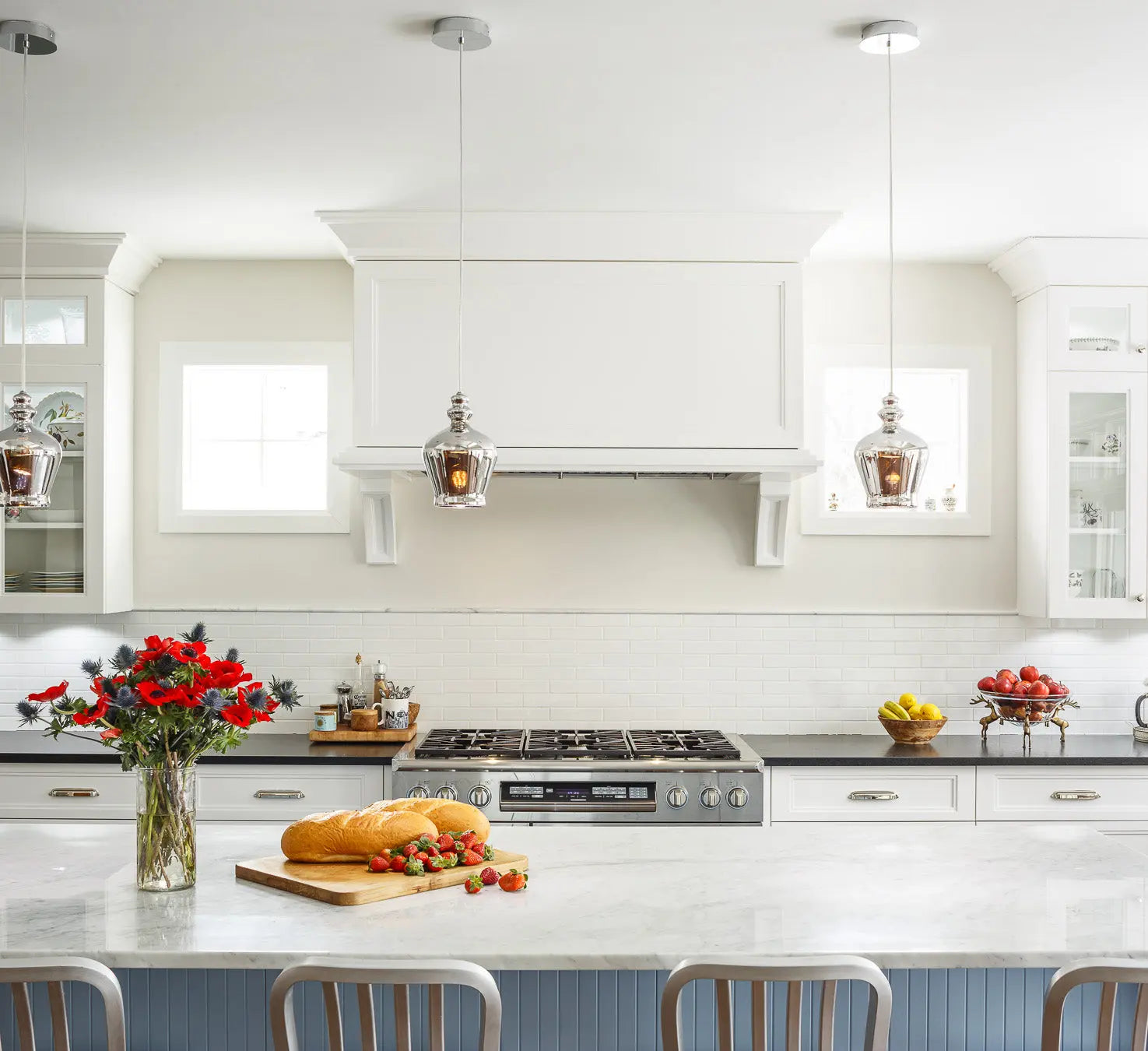
A kitchen, for example, is rarely experienced all at once.
It is experienced in fragments.
In the distance between the sink and the cooktop. In the placement of a drawer that either makes sense immediately or requires adjustment every time it is used. In the way light falls across a surface in the early morning, and again in the evening.
These are not dramatic moments, but they accumulate.
And over time, they define whether a space feels intuitive or frustrating, calm or unresolved.

The same applies to a bathroom.
It is not the tile that defines the experience, but the sequence of use. How the space supports routine. How materials respond to water, to heat, to time. Whether the layout allows for ease or introduces friction at every step.
These are not decisions that can be made by simply looking at a reference image.
They require something else.
At Astro, design is approached as a process of alignment.
Before materials are selected or finishes discussed, it is necessary to understand how a space will be used and by whom.
This is not a philosophical exercise. It is practical.
How many people use the space at the same time?
What needs to be stored, and where?
What habits already exist, and which ones are worth changing?

These questions are not always comfortable, because they move the conversation away from preference and into reality.
But they are essential.
Because without this level of clarity, decisions tend to be made in isolation.
A cabinet is chosen because it looks right. A countertop because it feels durable. A fixture because it matches something else that has already been selected.
Each decision may be reasonable on its own.
But without a clear understanding of how the space is meant to function, those decisions rarely align into something cohesive.

This is where the idea of Living by Design begins to take form.
Not as a statement, but as a method.
It means that every decision is evaluated not only for how it looks, but for how it contributes to the overall experience of the space.
It means considering how materials will behave, not just how they appear. How a layout will be used, not just how it reads on a plan. How the space will feel on an ordinary day, not just when it is complete.
It also means accepting that good design often requires restraint.
Not every idea needs to be included. Not every feature adds value. In many cases, the quality of a space is defined as much by what is removed as by what is added.
This is where experience becomes critical.
Because knowing what to leave out is not intuitive. It comes from understanding how spaces perform over time, and where complexity tends to introduce problems rather than solve them.

The role of process becomes particularly important here.
Within the Atelier, ideas are not simply translated into drawings. They are tested.
Proportions are adjusted. Relationships between elements are clarified. Selections are evaluated not individually, but in context.
This is where the gap between concept and reality is addressed.
Because a design that works in an image does not always work in a built environment. Light changes. Materials interact differently at scale. Details that seemed minor begin to carry more weight.
Without a structured process, these issues tend to surface during construction, when changes become more difficult and more costly.
With a structured process, they are resolved earlier, when decisions can still be made with clarity.

What emerges from this approach is not a specific style, but a specific quality.
Spaces that feel coherent, not because they are minimal, or highly detailed, or aligned with a particular trend, but because the decisions behind them are consistent.
Nothing feels out of place. Nothing feels unresolved.
There is a sense that the space has been considered as a whole, rather than assembled over time.
For the people who live in these spaces, the difference is often subtle at first. There is no single moment where the design announces itself. Instead, there is a gradual realization that things work.
The kitchen supports meal preparation without friction. The bathroom accommodates routine without compromise. That storage is placed where it is needed, rather than where it was easiest to place.
Over time, this becomes the defining characteristic of the home. Not how it looks, but how it lives. This is the distinction that matters.
Design that is driven by images tends to prioritize appearance.
Design that is driven by use tends to prioritize experience.
Our goal is not to separate the two but to align them, to create spaces that can be appreciated visually but, more importantly, lived in comfortably, consistently, and over time.


